
Effective binding can transform an abundance of loose sheets into a usable product. Whether it’s glued, stapled, tied or otherwise, it’s important to consider the durability, production cost and general use of a binding technique to ensure it’s right for you and your project. To help you make an informed decision, this article explores some of the most popular print binding techniques, highlighting the advantages and disadvantages of each.
Saddle Stitch
Saddle stitch – also known as stapled binding – is one of the most popular print binding methods for advertising material such as magazines, catalogues, booklets and brochures. Its popularity can be attributed to its time-effective and economic technique. To complete a saddle stitch, sheets of paper are stacked, folded in half and then stapled through the fold line with a series of wire staples.
Once the pages have been bound, the document is trimmed on three sides. This process makes the print binding technique extremely durable and doesn’t add too much bulk to your product, which is particularly advantageous if you need to transport it. However, it’s important to remember that saddle stitch binding will only work with page counts that are a multiple of four.
Perfect Bind
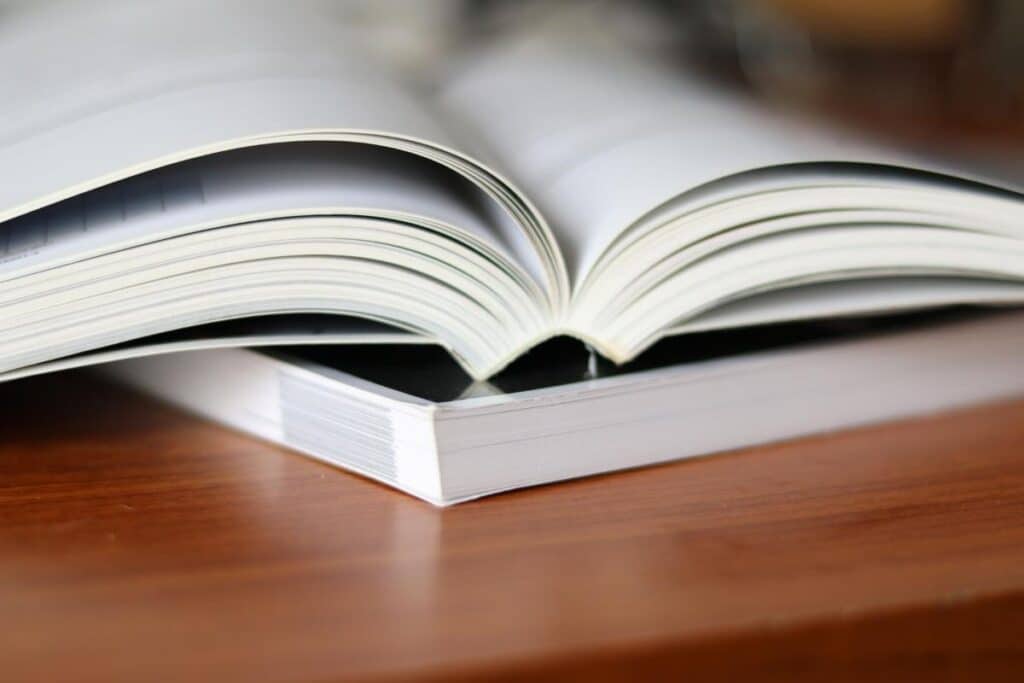
Perfect binding is likely the option for you if you need a lightweight, cost-effective option for high-page-count documents. Perfect binding creates the appearance of a professional paperback book without additional cost or production time. The process involves gathering together sections of folded pages, trimming their spines and binding them up the spine with glue. There are two types of glue to choose from:
Hot melt adhesives are the more affordable option, but they have limited durability and are only suitable for simple and short-life products.
PUR adhesives are more expensive but also more durable, making them ideal for long-life products with high page counts.
Glued Fold Bind
If you need simple advertising products and durability is not your priority, glue fold binding is the right choice for you. This print binding method applies glue to the paper’s crease lines, which are then folded and trimmed. Paper weight should range between 80 gsm to 135 gsm, so this print binding method is best suited for small leaflets, inserts and advertising mail.
Glue Pad Bind
This method is often used to bind documents with a short lifespan that requires individual pages to be torn out. Therefore, glue pad binding is perfect for notepads, training documents and vouchers. For this print binding technique, an adhesive is applied to the spine, and individual sheets of paper are combined into one product.
Thread Sewn Bind
If you require a strong and durable print binding method, thread-sewn binding is a complex technique that is fit for purpose. Thread-sewn binding involves folding individual sheets and sewing them together. Once a book block is assembled, it is glued to the spine and carefully trimmed on three sides. Finally, the pages are glued to the paper, fabric or hardback cover to add the finishing touch. No other binding technique has the ability to incorporate such a wide range of materials, and there are virtually no limits to the number of pages you can include.
Spiral Bind
Also known as coil binding, this technique inserts plastic wire through punched holes in the document’s pages and cover. As well as being durable, this style can accommodate large page counts and allows the product to lay flat when opened. Therefore, it’s commonly used for cookbooks, training manuals and large writing pads.
If you require print binding services, why not contact us here at Sherwood Universal. We have four decades’ worth of experience in book binding; all our book binding services are conducted by our print and finishing experts, so you can rest assured you’ll receive a quality end product.

Tony Hunt is a seasoned Print Industry Expert with over three decades of experience in the trade. He has been instrumental in helping clients expand their product ranges, secure more business, and ultimately increase their profitability. Tony’s approach is characterised by enthusiasm and passion, balanced with a realistic and tactical mindset. His expertise is further bolstered by seven years of running his own business, fostering a commercially-driven perspective. An excellent communicator, Tony prides himself on never compromising on detail.