
Reward systems are the perfect way to help encourage good behaviour in young children. For instance: The Department of Education’s research report found that 100% of all schools rated ‘Outstanding’ used reward systems. But for rewards to work, they need to be customisable, teacher-friendly and engaging for pupils. This article will explain how to effectively implement reward systems, their benefits and the variety of rewards on offer, with a particular focus on primary school certificates.
What are School Reward Systems?
Reward systems are an agreed set of ‘rules’ underpinned by the school’s core values. Although classroom rewards can take many forms, they all celebrate the positive behaviours of pupils. Research states that giving positive feedback improves pupil behaviour by 80%. As you reward children for good behaviour, they are positively reinforced to continue being good, creating a mutually-beneficial cycle.
How to Implement Effective Reward Systems
A 2014 Ofsted study found that 1 in 20 primary school teachers reported losing 10 minutes of teaching time per hour due to low-level classroom disruption. In many cases, the difficulty of maintaining an orderly classroom was attributed to an inconsistent application of behavioural policies. Although sporadic rewards can provide instant gratification, they will not encourage behavioural change in the long term. For a reward to be effective, it must be consistent.
Benefits of Primary School Certificates
Designing and deploying an entire reward system can be a demanding task. However, using certificates to reward pupils can quickly and effectively reinforce good behaviour and boost classroom morale. Other benefits of primary school certificates include:
- Sense of belonging – Research states that reward systems can develop a school culture that is consistent, positive and safe. Therefore, if a classroom is full of praise and reward, a child is more likely to have a sense of belonging.
- Healthy competition – Physical rewards such as primary school certificates can facilitate healthy competition between pupils. If children witness their peers being rewarded, they’re more likely to mimic this good behaviour.
- Reduce bad behaviour – Research has found that if teachers give pupils a 2:1 ratio of positive and negative feedback, office referrals for bad behaviour drop by 30%.
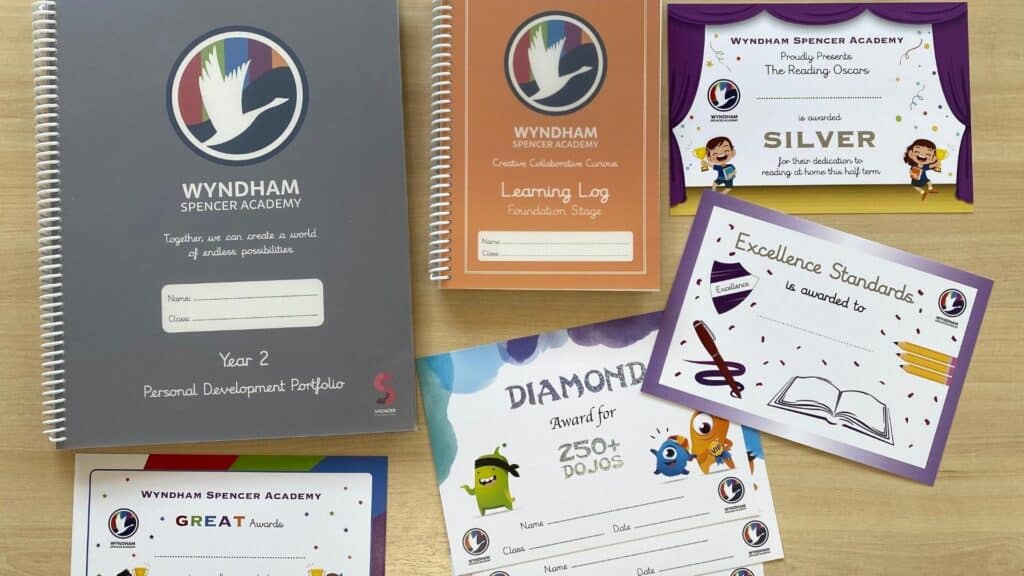
Certificate Types
There are a variety of primary school certificates to choose from. Therefore, we recommend consulting digital printing professionals with a strong background in school print to help narrow down your options. To get you started, we have collated a list of the best certificate options currently on the market:
- Star of the Day & Star of the Week
These certificates can be awarded during assembly, so pupils receive peer recognition. - Headteachers Award
Awarded if a pupil has excelled in a variety of areas, including attendance, academia, teamwork and good behaviour. - Golden Certificates
These can be exchanged for prizes such as extra playtime, ice lollies or a lucky dip in the ‘special box’. - Star Writer & Star Reader
Encourages academic excellence. - Leadership Award
This certificate acknowledges when a child has effectively led an activity or helped support a peer in need. - 100% Attendance Award
Encourages punctuality and attendance at school. - Sports Day Award
These celebrate a range of supporting abilities and reward children for participating and working well in a team.
What better place to record pupils’ achievements than their primary school planners? At Sherwood Universal, we design professional and customisable planners with behavioural charts to complement your school’s reward systems. Providing space for pupils to showcase their achievements increases their visibility and, in turn, encourages further positive behaviour.

Tony Hunt is a seasoned Print Industry Expert with over three decades of experience in the trade. He has been instrumental in helping clients expand their product ranges, secure more business, and ultimately increase their profitability. Tony’s approach is characterised by enthusiasm and passion, balanced with a realistic and tactical mindset. His expertise is further bolstered by seven years of running his own business, fostering a commercially-driven perspective. An excellent communicator, Tony prides himself on never compromising on detail.